 UniSpark

UniSpark
Exploring Hybrid Attention for
Multimodal Understanding and Generation
Understand, create, and edit within one shared framework.
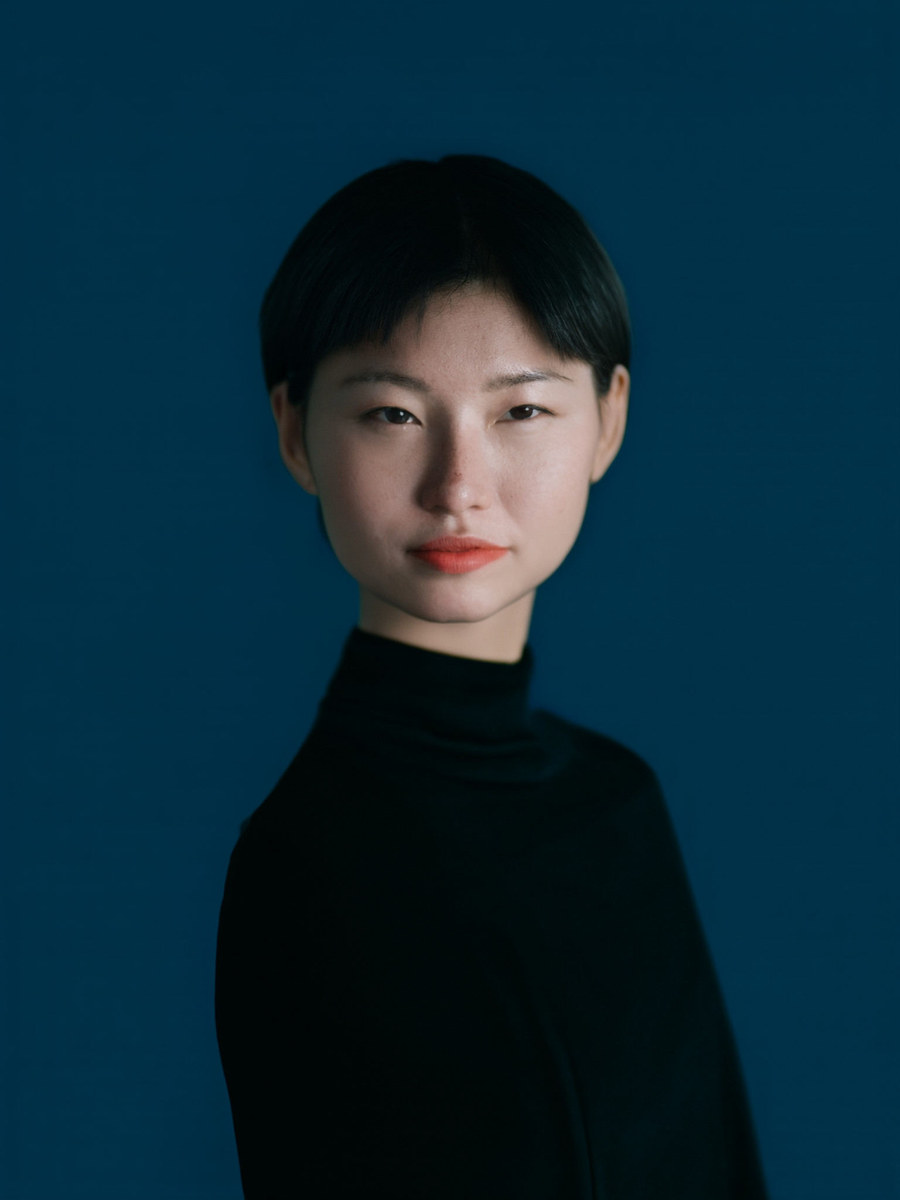

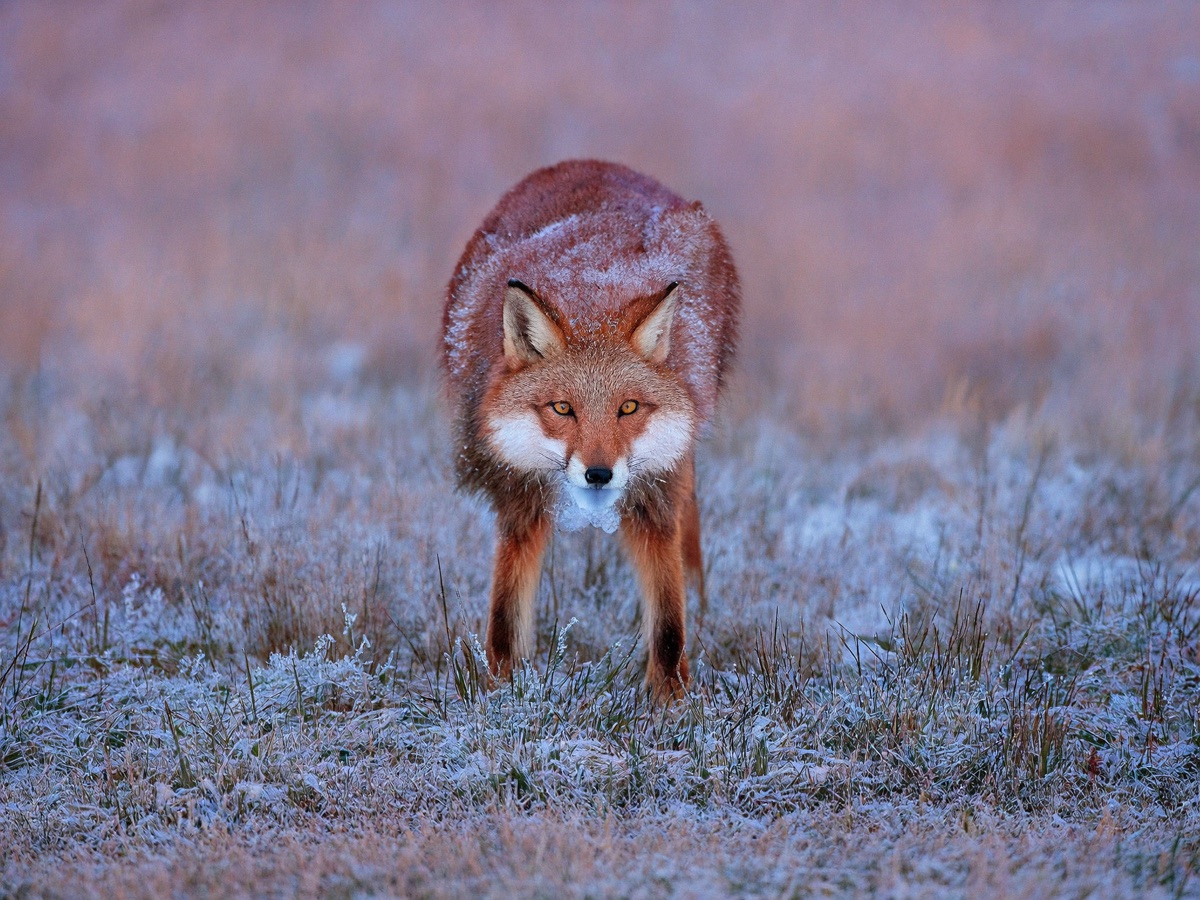
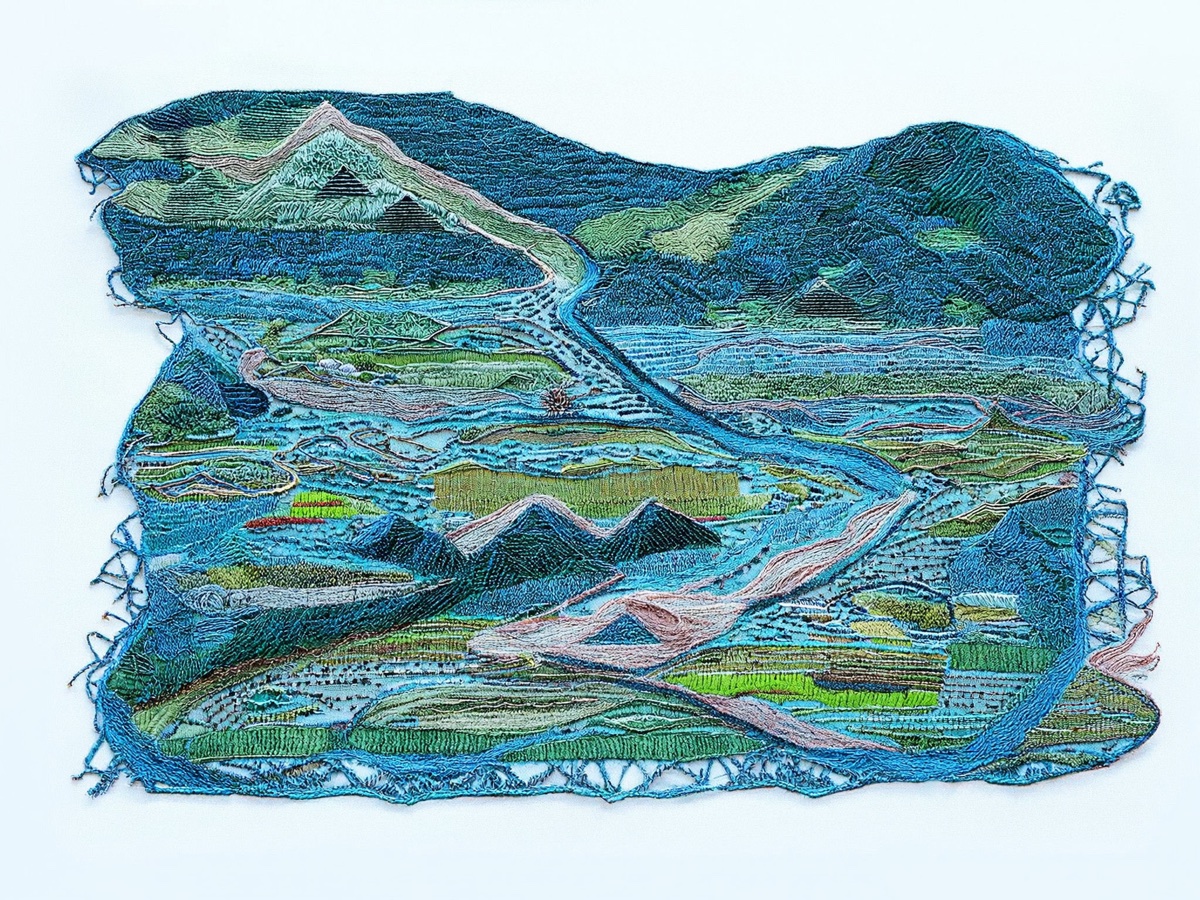
Selected generations from the UniSpark paper.
View the full galleryHybrid attention.
Shared visual context.
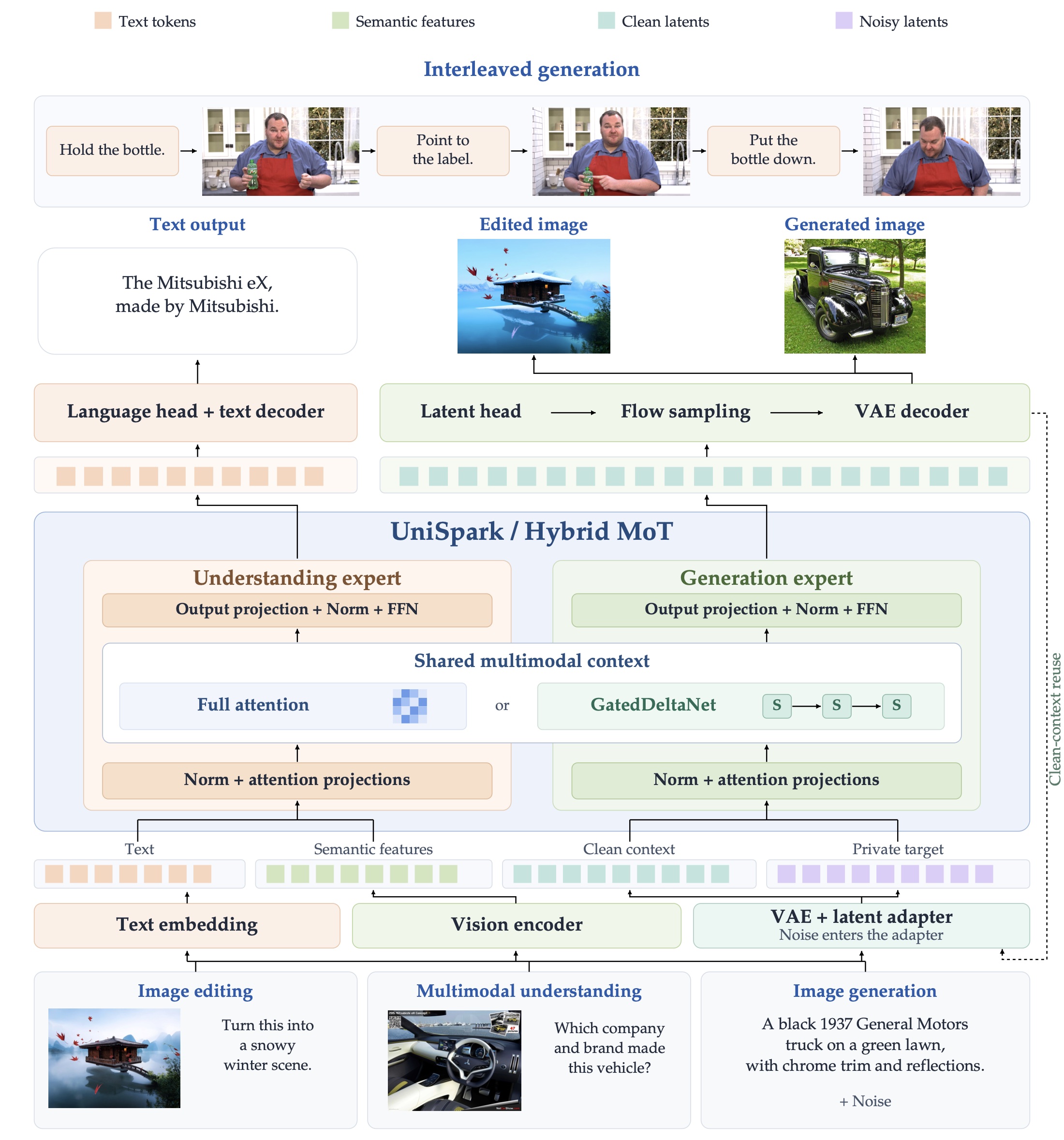
Can hybrid attention support both understanding and visual generation? UniSpark brings full attention and recurrent linear attention into a shared Mixture-of-Transformer-Experts backbone.
Autoregressive text prediction and visual flow matching connect language and images. Private noisy targets remain separate from reusable clean content, so completed outputs can provide context for later predictions.
Training progresses from image resolution scaling up to 2K to unified supervised refinement, followed by video adaptation with mixed image and video tasks. The understanding branch stays frozen during video adaptation.
Explore the model architecture
From words to visual worlds
Portraits, architecture, natural scenes, crafted objects, art, and cartoons. Explore six categories, including anime, manga, and animated characters.
Small instructions.
Meaningful changes.
Reference-conditioned editing changes selected attributes while retaining the scene. Choose an example and drag the divider to compare.
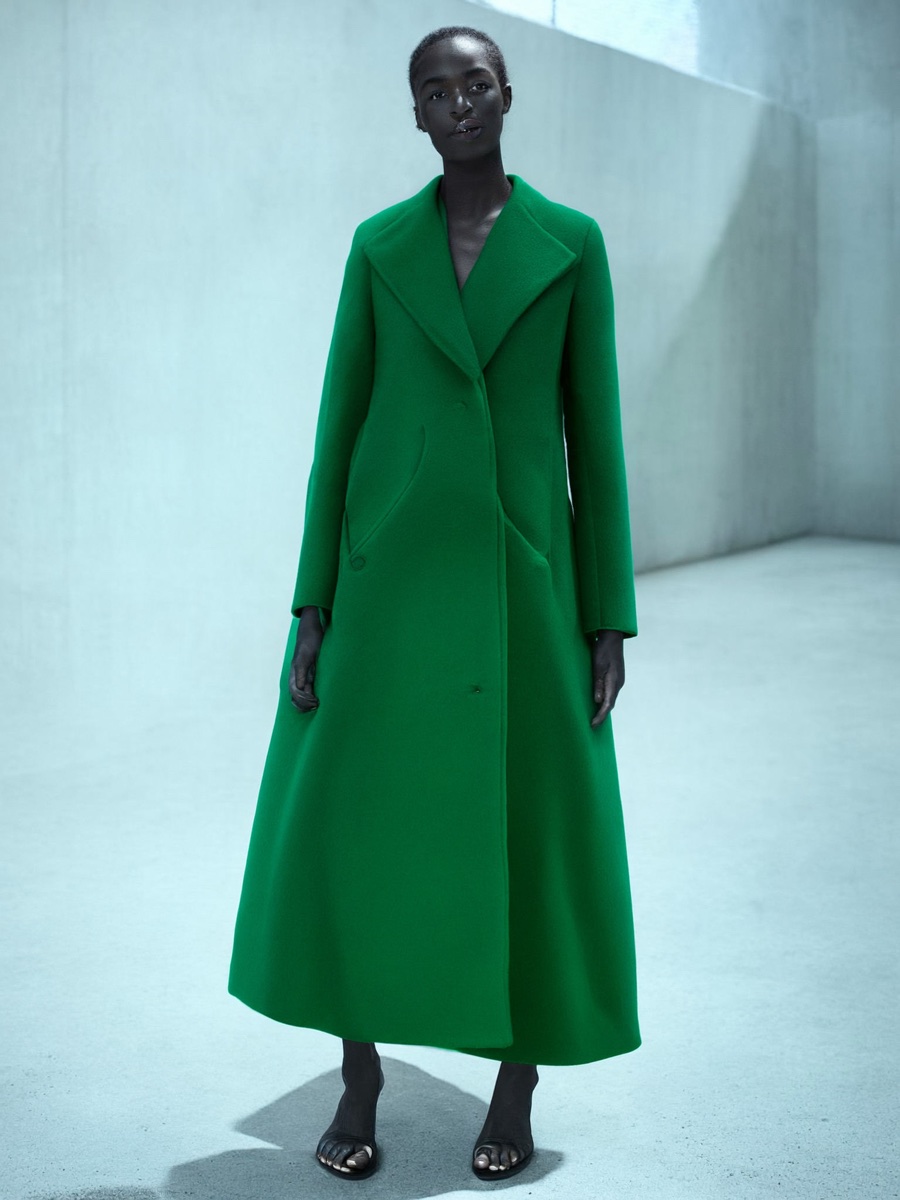
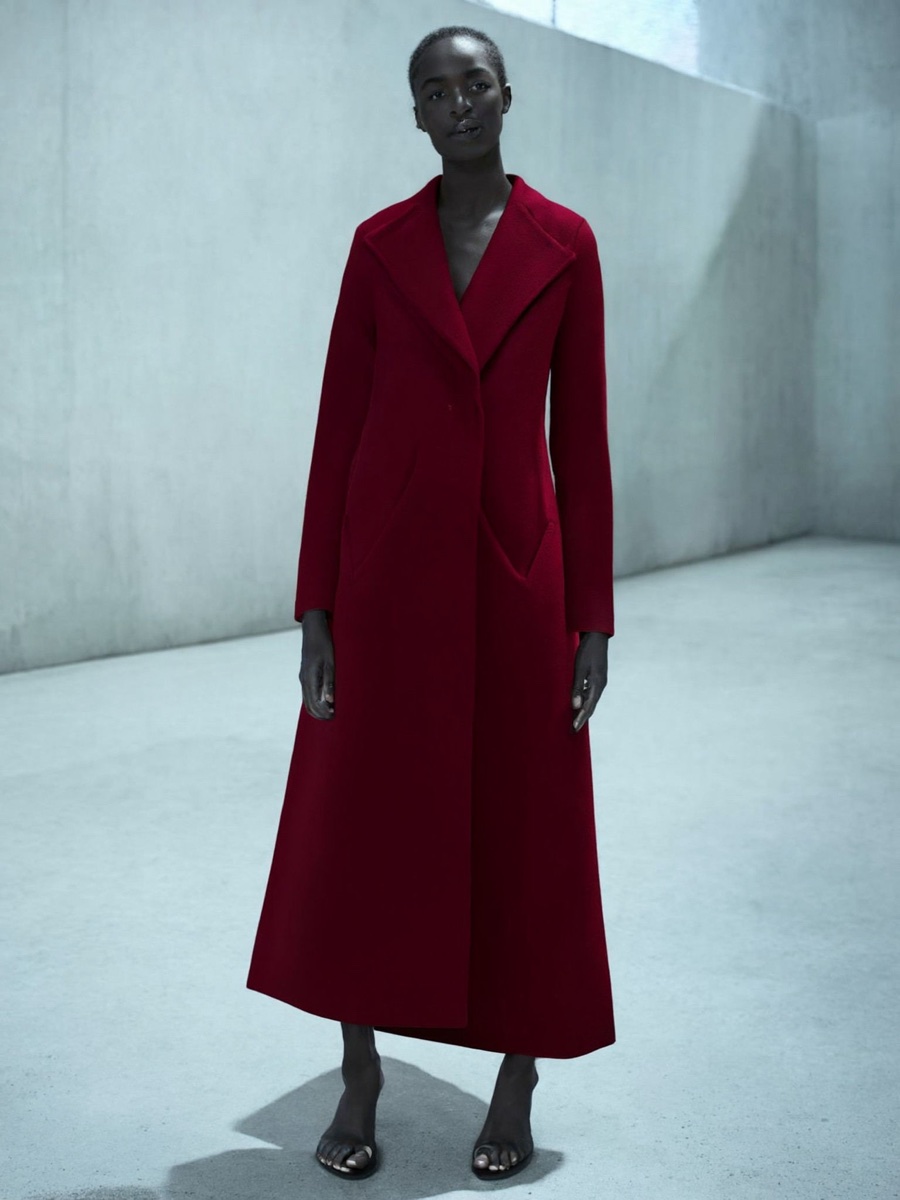 SourceEdited
Drag to compare · Use arrow keys when the slider is focused
Beyond a single image
Interleaved prediction carries visual context across successive outputs. These four-image sequences illustrate scene continuity as actions unfold.
UniSpark in action
Generation, editing, and visual continuity in one showcase.
72-second showcase
Understanding, generation, and efficiency
Explore benchmark breakdowns, evaluation settings, and the trade-offs behind each result. Expand a table to see all model entries reported in the paper.
View the benchmark overview
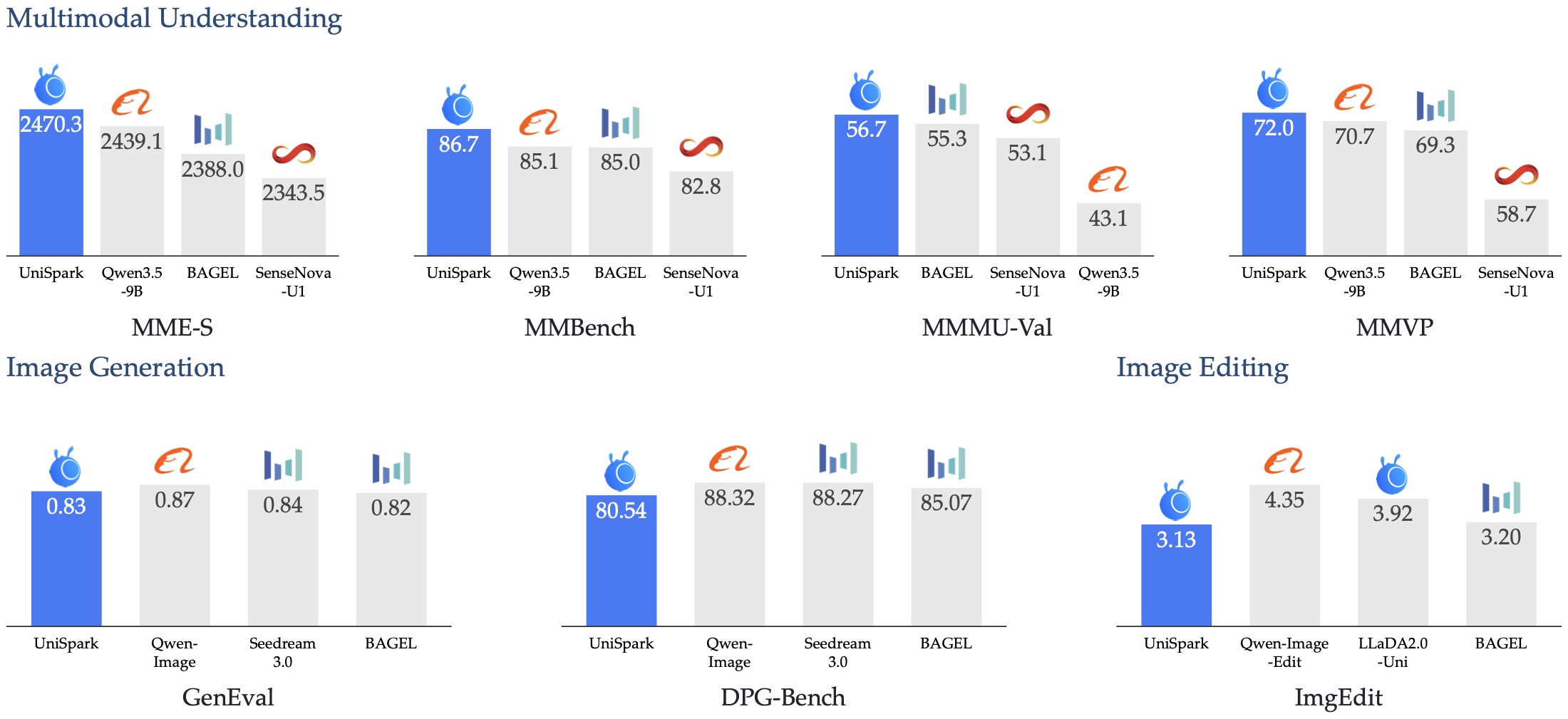
Source: Technical report, Experiments. Values follow the manuscript tables; benchmark papers are linked in each evaluation-settings panel.
Reference
@misc{pan2026unisparkexploringhybridattention,
      title={UniSpark: Exploring Hybrid Attention for Multimodal Understanding and Generation},
      author={Jiancheng Pan and Yuzheng Liu and Hengyuan Cao and Qiyuan Zhang and Yangyan Li and Biao Gong and Zheng Zhang and Ka Long Cheng and Xinyang Wang and Yujun Shen},
      year={2026},
      eprint={2611.16517},
      archivePrefix={arXiv},
      primaryClass={cs.CV},
      url={https://arxiv.org/abs/2611.16517},
}